Stroke
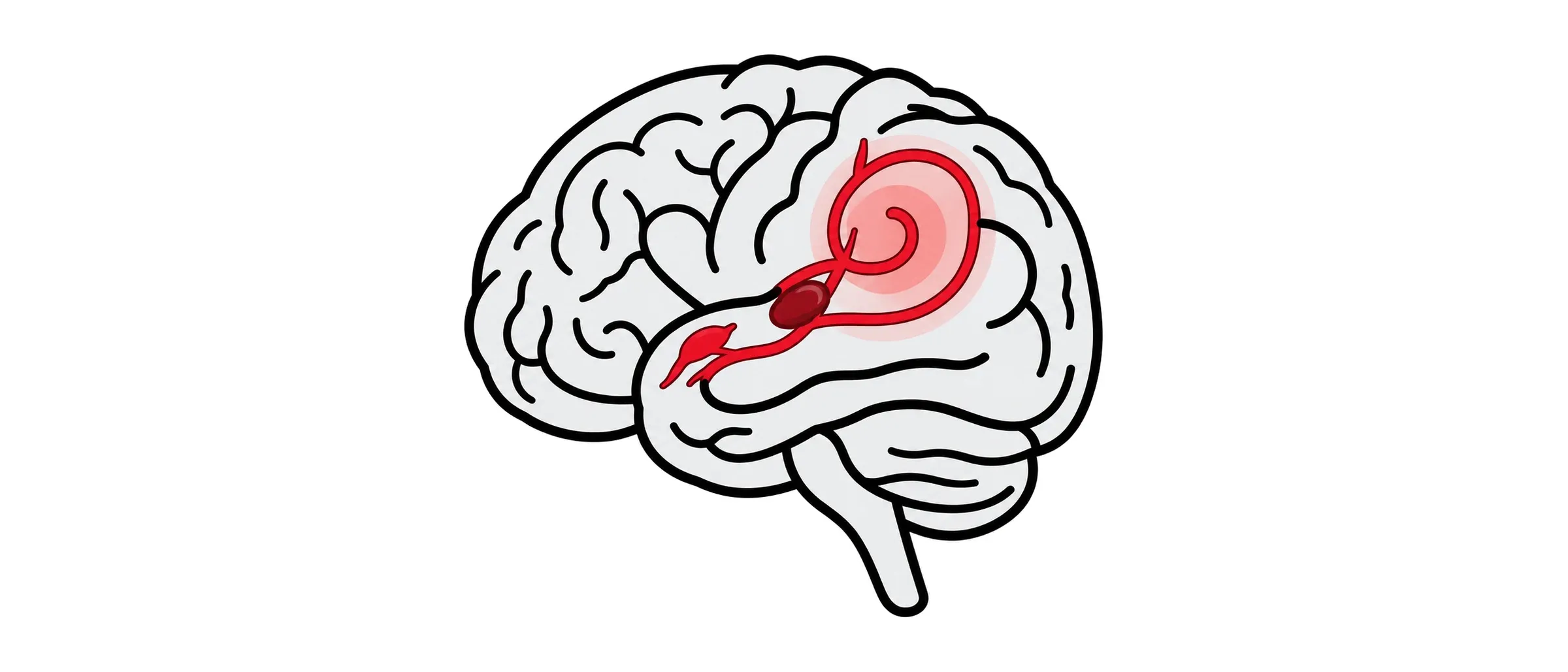
A stroke caused by a clot blocking a large brain artery can be treated by removing the clot through a catheter. Speed matters more than anything else. If you or someone with you has stroke symptoms now, call 999.
What it is
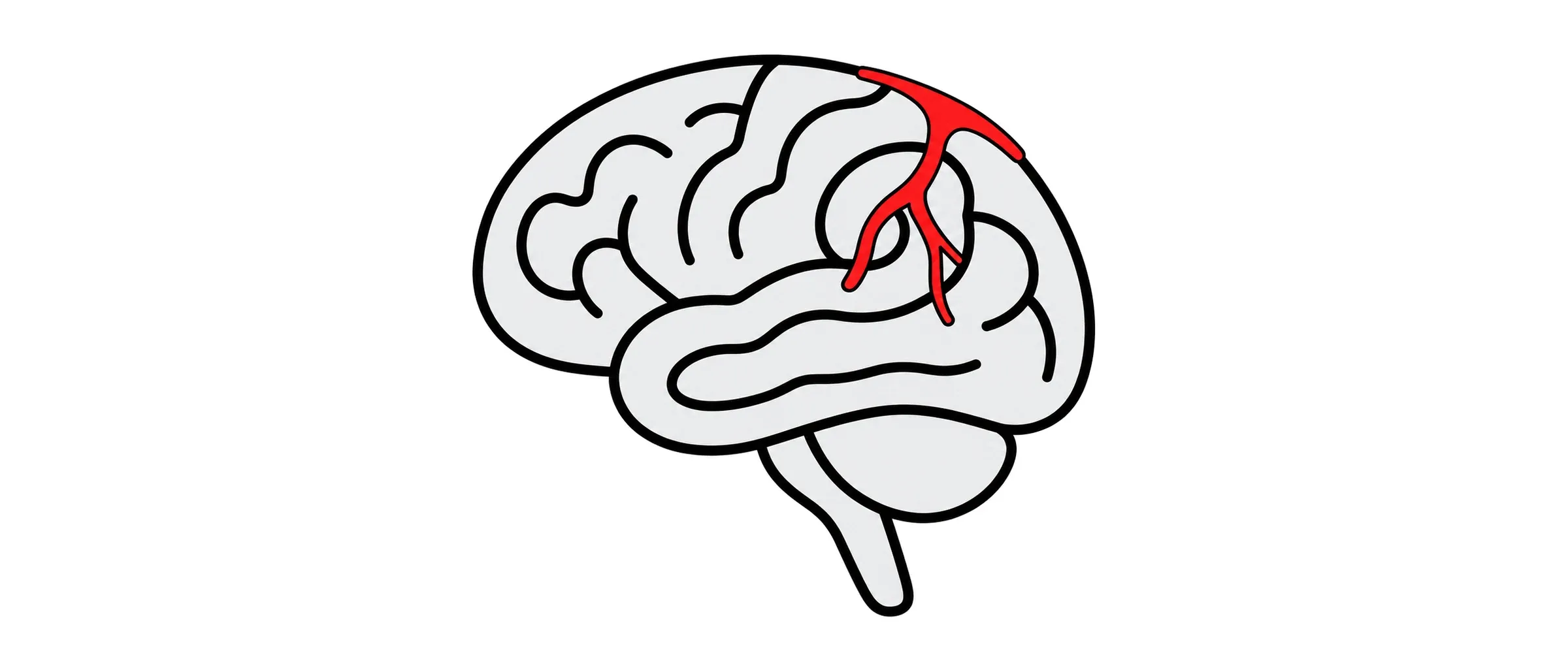
Most strokes happen when a clot blocks an artery supplying part of the brain. Brain tissue beyond the blockage starts to fail within minutes. The signs are sudden: a drooping face, weakness of an arm or leg, slurred or lost speech, loss of vision. An ambulance takes you to a hospital that can scan you and treat you at once. This page explains what that treatment is; it is not a route to arranging it.
How it is treated
Two treatments work in the first hours. Clot-busting medicine given into a vein dissolves smaller clots. Mechanical thrombectomy removes larger clots directly: I pass a catheter from an artery at the groin or wrist up to the blocked vessel in the brain, capture the clot with a stent retriever or suck it out through an aspiration catheter, and restore flow. It is done under sedation or general anaesthetic in an angiography suite, guided by X-ray. Whether thrombectomy is possible depends on the clot’s location, how much brain is still salvageable on the scans, and how much time has passed. With advanced imaging selection established by landmark trials such as DAWN and DEFUSE-3, the eligible thrombectomy treatment window can now be extended up to 24 hours from symptom onset in carefully selected cases.
I led a major London regional neurointerventional service from 2012 to 2025, establishing a 24-hour thrombectomy service, and served as Principal Investigator on international thrombectomy trials.
What to expect afterwards
After thrombectomy you are cared for on a stroke unit. Recovery depends on how quickly flow was restored and how much of the brain was affected. Rehabilitation, medicines to prevent another stroke and treatment of the cause (for example an irregular heart rhythm or a narrowed neck artery) follow.
Risks
The main risks of thrombectomy are bleeding into the brain, damage to the artery and the risks of the anaesthetic. They are weighed against the near-certain harm of leaving a large artery blocked, which is why the treatment is offered.
Where I can help outside the emergency
I see patients privately after a stroke or TIA (a transient attack that resolves) to review the imaging, look for a cause that can be treated and give a second opinion on whether a narrowed artery should be stented.
Common questions about stroke
Can I book a thrombectomy privately?
No. Thrombectomy is an emergency treatment delivered through the NHS stroke pathway. Call 999.
I had a stroke and nobody found a cause. Can you help?
Sometimes. A careful review of the scans, and occasionally a catheter angiogram, finds causes that standard imaging misses.
Have another question?
Ask a question and the AI assistant will answer from Dr Makalanda’s published information. It cannot give personal medical advice, so please do not share personal or medical details. For emergencies, call 999.