Embolisation for subdural haematoma
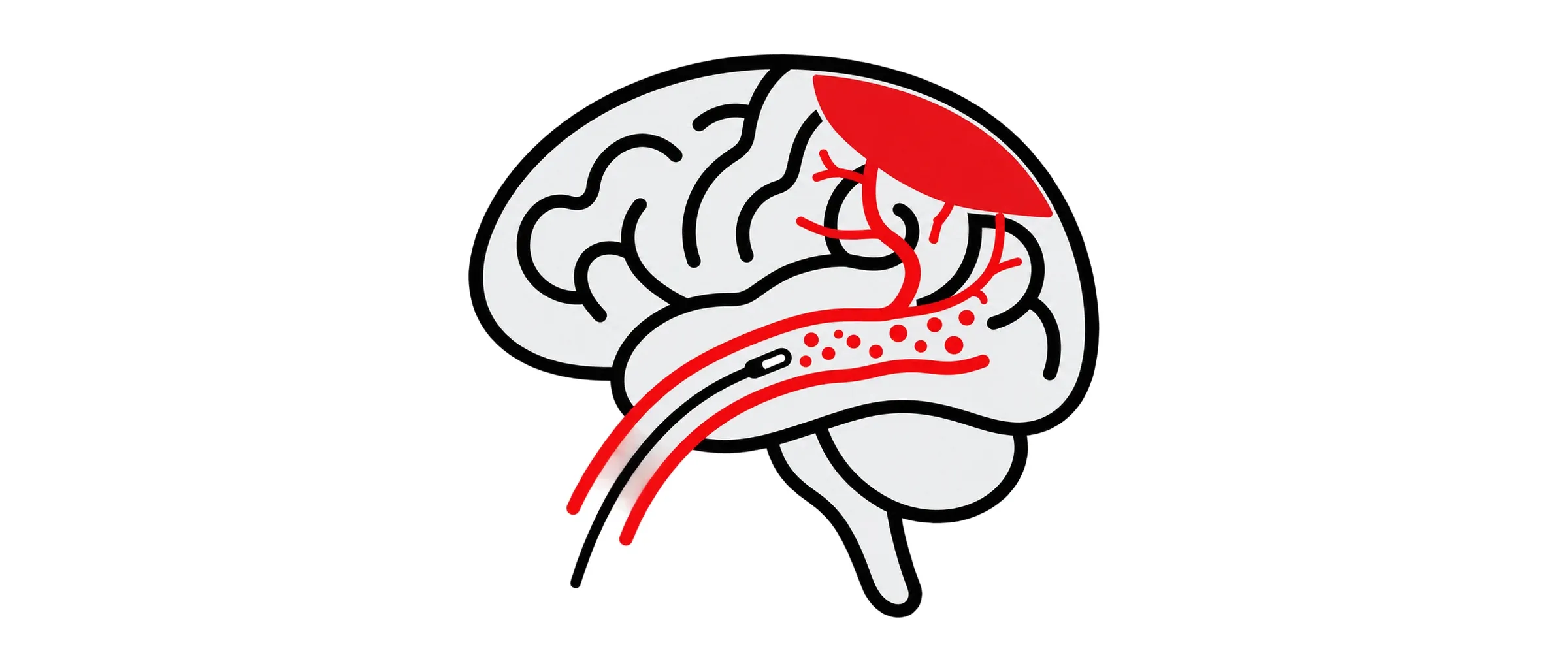
A chronic subdural haematoma is a collection of old blood between the brain and its lining, usually in older people and often after a minor bump. Draining it works, but it often refills. Blocking the small artery that feeds the lining stops that.
What it is
The collection forms slowly over weeks. A membrane grows around it with fragile new vessels supplied by the middle meningeal artery, and those vessels keep leaking, which is why the haematoma persists or comes back after drainage. Symptoms include headache, confusion, unsteadiness, weakness on one side and drowsiness. Sudden deterioration is an emergency: call 999.
How it is found
A CT scan shows the collection and how much it is pressing on the brain. MRI adds detail when needed.
How I treat it
Middle meningeal artery (MMA) embolisation targets the cause. Under local anaesthetic with sedation, or a general anaesthetic, I pass a microcatheter from the wrist or groin into the artery and block it with tiny particles, a liquid embolic agent or coils. The membrane loses its blood supply, the leaking stops and the body reabsorbs the collection over the following weeks.
It is used on its own for collections that are not yet pressing hard on the brain, alongside surgical drainage for those that are and for haematomas that have come back after surgery. While conventional burr-hole drainage alone carries a recurrence rate of approximately 12% to 30%, adding MMA embolisation as an adjunct substantially reduces recurrence to under 5%. Patients on blood thinners, who are most likely to recur, benefit particularly. The decision is made with the neurosurgeon looking after you.
What to expect
The procedure takes under an hour. Many patients go home the same day or after one night. Follow-up CT scans over the next three months show the collection shrinking.
Risks and follow-up
The middle meningeal artery has small connections to the nerves of the face and eye, so the main specific risks are facial weakness or visual disturbance, usually temporary. Stroke and bleeding at the puncture site are rare. I quote the figures at the consultation.
Common questions about embolisation for subdural haematoma
Is this instead of surgery?
Sometimes. For a large collection causing pressure, surgery still comes first and embolisation reduces the chance of it refilling.
I am on anticoagulants. Does that matter?
It raises the chance of recurrence after drainage alone, which is one of the main reasons embolisation is offered.
Have another question?
Ask a question and the AI assistant will answer from Dr Makalanda’s published information. It cannot give personal medical advice, so please do not share personal or medical details. For emergencies, call 999.