Vertebroplasty and kyphoplasty
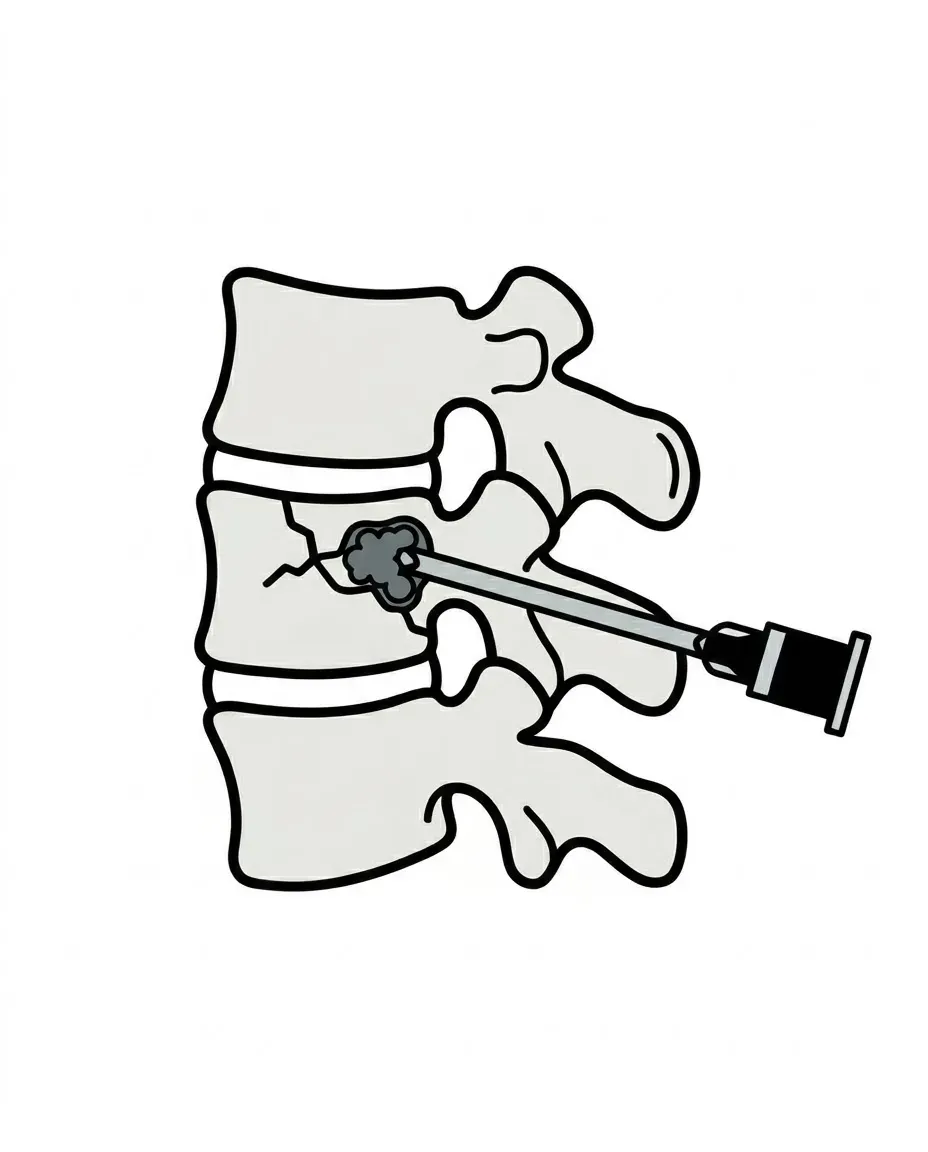
A spinal compression fracture is a vertebra that has cracked and squashed down, usually because osteoporosis has thinned the bone. Most heal on their own. For the ones that do not, I stabilise the bone from the inside with cement, through a needle, without an operation.
What it is
A vertebra weakened by osteoporosis, long-term steroids or cancer can give way under a load healthy bone would shrug off. The front of the bone squashes into a wedge. The pain is often severe and sharp with movement. A fracture pressing on the spinal cord or nerves, with new weakness, numbness or loss of bladder or bowel control, is an emergency: go to A&E.
How it is found
X-ray or CT shows the collapse but cannot tell a fresh fracture from a healed one, and only a fresh fracture benefits from cement. MRI makes that distinction by showing inflammation inside the bone.
How I decide whether to treat
Most compression fractures settle over weeks with pain relief and keeping active, and I say so when that is the right course. I consider treatment when pain is not controlled by medication, when it keeps you in bed or in hospital, when you are frail and unlikely to tolerate weeks of immobility, or when cancer caused the fracture. Cement treats pain from the broken bone. Pain from muscle spasm and the facet joints needs different treatment, such as spine injections.
How I treat it
Every technique places a needle through the back of the vertebra into the broken bone under continuous X-ray, and finishes with bone cement that sets within minutes and splints the fracture from inside.
Vertebroplasty injects the cement directly. Right for most osteoporotic fractures with little height loss.
Balloon kyphoplasty inflates a balloon first, pushing the collapsed bone back towards its shape and creating a cavity filled at lower pressure.
Vertebral body stenting expands a small metal mesh stent on a balloon. The stent stays to hold the height gained before cement is added.
SpineJack is an expandable titanium implant that opens inside the vertebra like a jack. It gives the most controlled restoration of height, my choice where the shape of the bone matters, not only the pain.
The choice depends on height lost, bone quality and whether cancer is involved. An unstable fracture, or one already pressing on the cord, needs a spinal surgeon, and I refer.
What to expect
You lie on your front under general anaesthetic or sedation, with one or two small skin punctures per vertebra. A single level takes under an hour. You walk the same day and go home the same day or next morning. Pain relief is usually quick. Cement does not treat the osteoporosis behind the fracture, so I make sure your bone health is being managed.
Risks and follow-up
The specific risk is cement leaking outside the vertebra, which is why the injection is watched on X-ray throughout and stopped the moment cement strays. Most leaks are harmless; a leak towards the spinal canal or into a vein is rare but matters, and the balloon, stent and implant techniques lower that risk. Infection and bleeding are uncommon. A cemented vertebra can shift load onto its neighbour, so a fracture at the next level is possible. I quote the figures for your fracture at the consultation. Follow-up is a review of pain and mobility.
Common questions about vertebroplasty and kyphoplasty
Will the cement take the pain away completely?
For most patients with a fresh, painful fracture it relieves the fracture pain substantially and quickly. Pain from muscles and joints around the fracture is separate and may need its own treatment.
My fracture is several months old. Is it too late?
Not always. What matters is whether the bone is still active on MRI. If it has healed, cement will not help, and I will say so.
What is the difference between vertebroplasty and kyphoplasty?
Both stabilise the fracture with cement. Kyphoplasty adds a balloon to create a cavity and recover some height before the cement goes in.
What are vertebral stenting and SpineJack?
Both are implants that stay inside the vertebra to hold the height that has been restored. A stent is a balloon-expanded mesh; SpineJack is a titanium device that opens like a jack. I use them where the bone has collapsed significantly.
Is it an operation?
No. It is done through a needle under X-ray guidance, with no incision beyond a few millimetres and no metalwork on the outside of the spine.
Will I be awake?
Usually not. Most procedures are done under a general anaesthetic. Sedation with local anaesthetic is an option for a single level in patients who cannot have a general anaesthetic.
Can I have it if the fracture is caused by cancer?
Yes, and it is often particularly helpful. I plan it alongside your oncology team, and it can be combined with radiotherapy.
Will it stop me getting another fracture?
No. It treats the broken bone, not the osteoporosis. Bone-strengthening treatment, which your GP or a bone specialist arranges, is what reduces the risk of the next one.
Can I get a second opinion?
Yes, and I see patients for exactly that. Bring your scans and reports.
Have another question?
Ask a question and the AI assistant will answer from Dr Makalanda’s published information. It cannot give personal medical advice, so please do not share personal or medical details. For emergencies, call 999.