Cerebral venous disorders

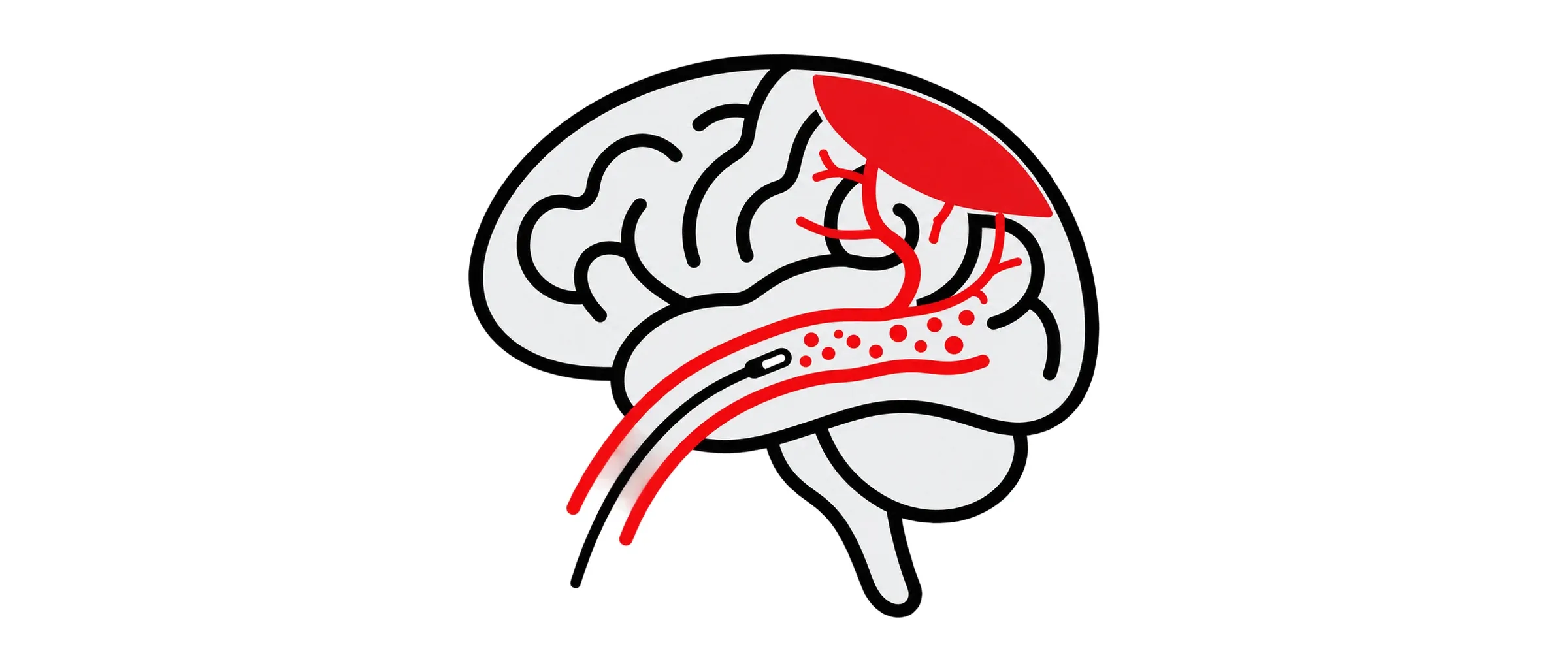
The brain drains through large veins called venous sinuses. When one narrows, pressure inside the head can rise, causing headaches, visual problems and pulsatile tinnitus. Measuring the pressure directly tells us whether a stent will help.
What it is
The commonest problem I see is narrowing of the transverse sinus, often with idiopathic intracranial hypertension (IIH): raised pressure inside the head, typically in younger women, causing headache, swelling of the optic nerves that threatens sight, and a whooshing noise in the ear. Other venous problems include clots in the sinuses (venous thrombosis) and narrowing left behind after a clot has cleared.
How it is found
MRI with a venogram shows the sinuses and the signs of raised pressure. The decisive test is a catheter venogram with manometry, which I do awake as a day case through a vein in the arm: I pass a fine catheter into the sinuses and measure the pressure on either side of the narrowing. A trans-stenosis pressure gradient cutoff of 6 to 8 mmHg or greater demonstrates that the narrowing is haemodynamically significant and that a stent is likely to help. A small gradient means it is not, and I will say so.
How I treat it
Medical treatment comes first for IIH: weight management and pressure-lowering tablets, with eye checks to protect vision. When those fail, when sight is at risk or when the tinnitus is intolerable and the pressures confirm the cause, I place a self-expanding stent across the narrowing under general anaesthetic to hold the sinus open. Blood then drains freely and the pressure falls, offering tinnitus resolution rates exceeding 85%.
What to expect
One night in hospital. Two antiplatelet medicines for a few months, then usually none. Headache for a week or two afterwards as the sinus stretches is common and settles.
Risks and follow-up
The main risks are bleeding inside the head, a clot forming on the stent and re-narrowing at the edge of the stent that occasionally needs a second stent. I quote the figures for your case at the consultation. Follow-up is with eye checks, symptom review and a CT or MR venogram.
Common questions about cerebral venous disorders
Will stenting cure my IIH?
It treats the venous cause of the raised pressure. Weight and other factors still matter, and eye follow-up continues.
I was told my tinnitus was untreatable.
Venous tinnitus with a measurable pressure gradient responds well to stenting.
Have another question?
Ask a question and the AI assistant will answer from Dr Makalanda’s published information. It cannot give personal medical advice, so please do not share personal or medical details. For emergencies, call 999.